Article
The Geometry of Reliability: Why Rhomboidal Mesh and Anchor Grids Are Ideal for Slope Stabilization
The Evolution of Slope Stabilization Methods Modern geotechnics offers a multitude of solutions for combating slope deformations: from classical gabions and massive retaining walls to shotcreting and flexible mesh systems. However, in complex rockfall-prone, scree, and landslide areas, where preventing the slightest soil movement, surface erosion, or rock detachment is crucial, active reinforcement systems come to the forefront. The selection of the correct material topology and fastening elements determines the durability of the entire engineering protection system.
The Geometry of Strength: Why the Rhomboidal Mesh? The effectiveness of facing (drapery) systems is largely determined by the mesh shape of the structural net. The rhomboidal (diamond-shaped) structure made of high-tensile steel wire possesses unique mechanical properties.
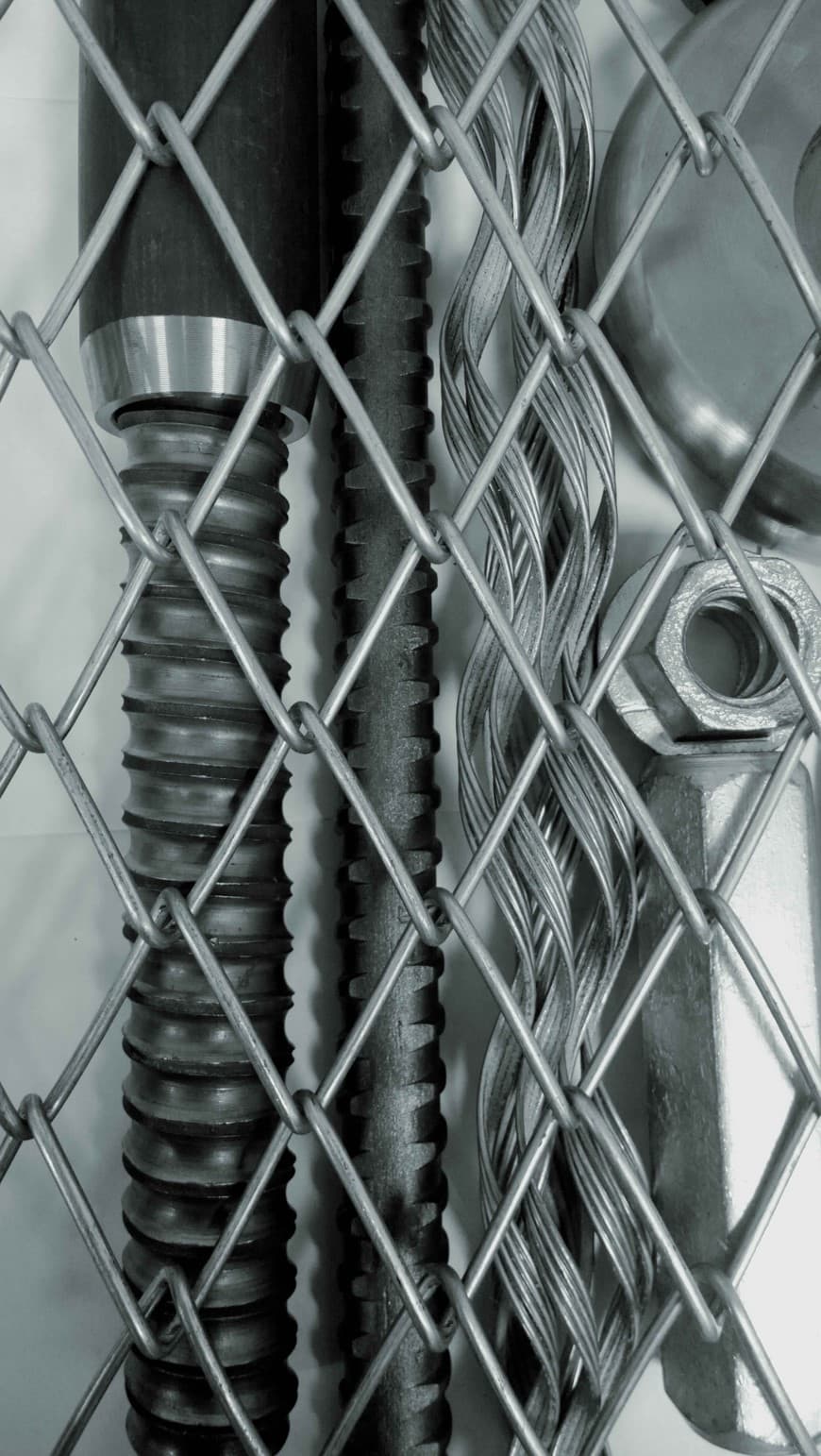
Unlike rectangular or hexagonal alternatives, the rhomboidal mesh ensures the optimal and uniform distribution of both longitudinal and transverse tensile forces. When the mesh is tensioned, the rhombuses tend to perfectly straighten out, creating a constant surface pressure across the entire contact area with the slope. Furthermore, due to the mobility of the nodal connections, such a mesh tightly contours any irregularities of the complex rock micro-relief without gaps, eliminating the formation of voids where small debris could accumulate and accelerate.
The Synergy of Mesh and Anchor Grids: The Effect of Active Compression By itself, a steel mesh merely retains the slope surface. But in combination with a calculated anchor grid, it transforms into a powerful structural framework.
Deep soil or rock anchors are installed according to a specified engineering pattern (e.g., 2x2 or 3x3 meters) and "stitch" through the unstable mass, anchoring securely into deep bedrock. The mesh panel is tensioned against the slope with a high design force. This creates an active compression effect: the system preventively compresses the surface layers, increasing the internal friction within the mass and completely blocking the development of landslide or rockfall processes before they even begin.
The 2D-Geo System: The Technological Standard for Active Protection A prime example of the successful implementation of this principle is the 2D-Geo slope stabilization system. Manufactured from high-tensile steel wire with a tensile strength of up to 800 N/mm², this system combines structural lightness with immense load-bearing capacity.
A crucial element of the system is the specialized toothed steel plates. They are installed at the anchor connection nodes and allow for the transfer of massive point loads from the anchor tension over a large area of the mesh panel, without damaging or deforming the rhomboidal mesh structure itself. At the same time, the 2D-Geo system remains completely permeable: it prevents the buildup of hydrostatic pressure behind the mesh and allows for subsequent revegetation using hydroseeding methods.
Conclusion The combination of high-tensile steel meshes with a rhomboidal cell shape and deep anchor fastening is the most progressive and cost-effective method of slope stabilization available today. Implemented through the 2D-Geo system, this approach guarantees unsurpassed rigidity in securing the rock mass, minimizes the volume of earthworks, and ensures the long-term safety of transport arteries and industrial sites with minimal maintenance costs.