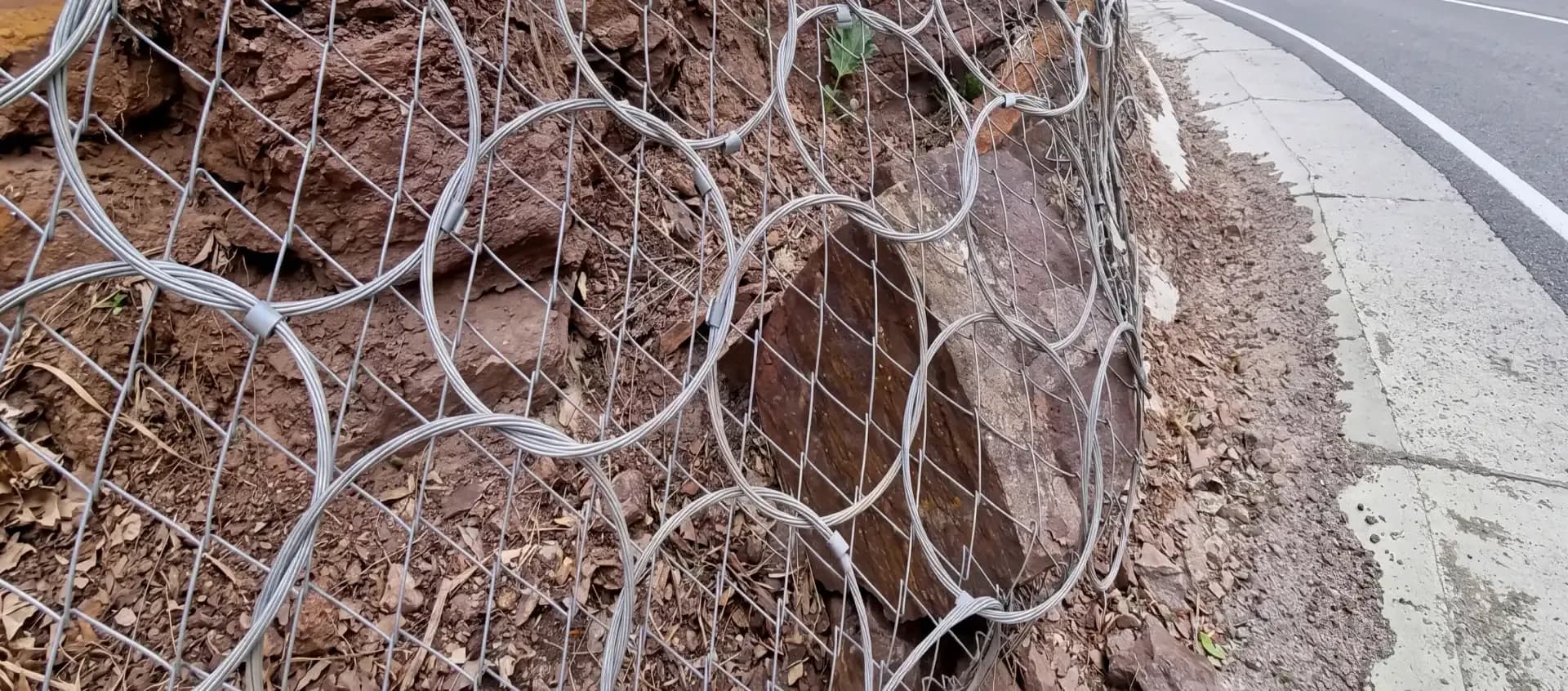
Engineering Protection Against Hazardous Slope Processes
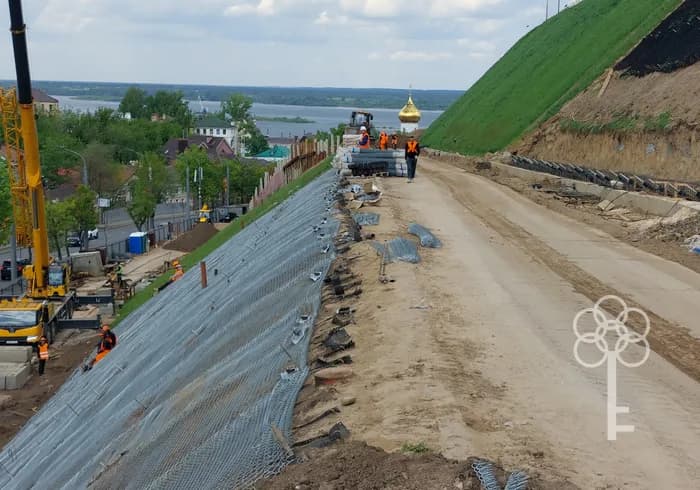
Engineering Protection with Geo-Barrier
The key business focus of Geo-Barrier is the development of comprehensive protection solutions for territories, buildings, and structures against hazardous slope processes characterized by high destructive power and extreme impact forces.
Hazardous natural phenomena such as landslides, rockfalls, debris flows, and snow avalanches pose a direct threat to human life; therefore, all work at every stage of a territorial engineering protection project should be entrusted to professionals.
Protection Against Hazardous Slope Processes
Traditionally, massive reinforced concrete structures are used to protect against hazardous slope processes: avalanche and rockfall galleries, dams, retaining walls, avalanche breakers, etc. However, the use of such structures is not always justified from a technical and economic standpoint, and sometimes it is simply impossible. In any case, the construction of such facilities in mountainous terrain is a costly, resource-intensive, and extremely time-consuming process.
An excellent alternative to traditional solutions are high-strength, flexible, deformable metal structures of the barrier and shelter types, capable of absorbing powerful impact forces directly on the slope. The basic element of all structures produced by our company is ring nets and 2D-Geo mesh made of high-tensile steel wires.
The optimal balance of flexibility and strength in our structures allows them to be used on complex slope sections with limited space, while their low weight and ease of installation will save budget during the construction and installation phase. Our accumulated experience and database of ready-made standard solutions enable us to provide consultations on various projects in a short time and without compromising quality, offering cost-effective solutions that meet all requirements.
Rockfall
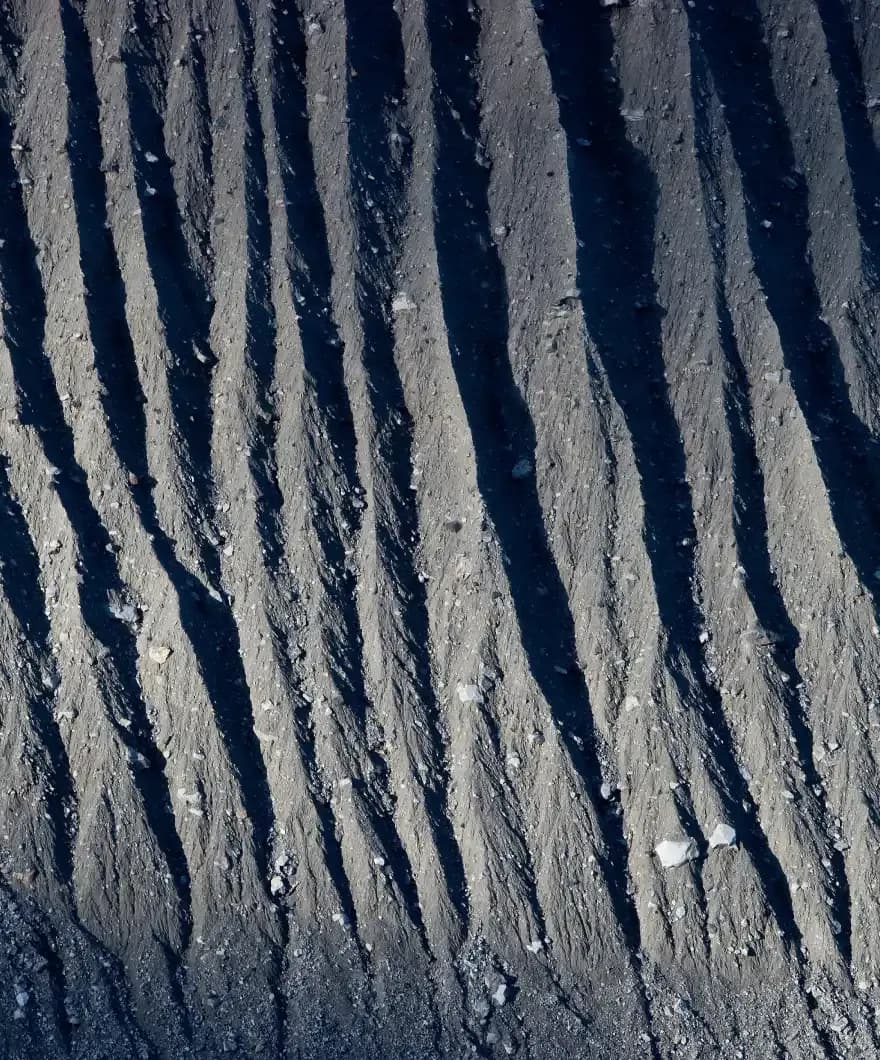
"The collapse of small rock masses consisting of fragments no larger than 1 cubic meter is called rockfall. A rock collapse is defined as the process of large blocks breaking away from the main rock mass and subsequently moving down the slope. The formation of a collapse is preceded by the appearance of a crack or a system of cracks, along which the rock block then detaches and collapses. The morphological result of collapses is the formation of scarps and niches in the upper parts of slopes and the accumulation of collapse debris at their toes." [General Geomorphology, G. I. Rychagov, 2006]. From the perspective of engineering protection measures against rockfalls, the most important indicators are: the degree of rockfall risk, event frequency, mass, fall trajectory, and impact kinetic energy of the largest potentially hazardous rock block.
Landslide
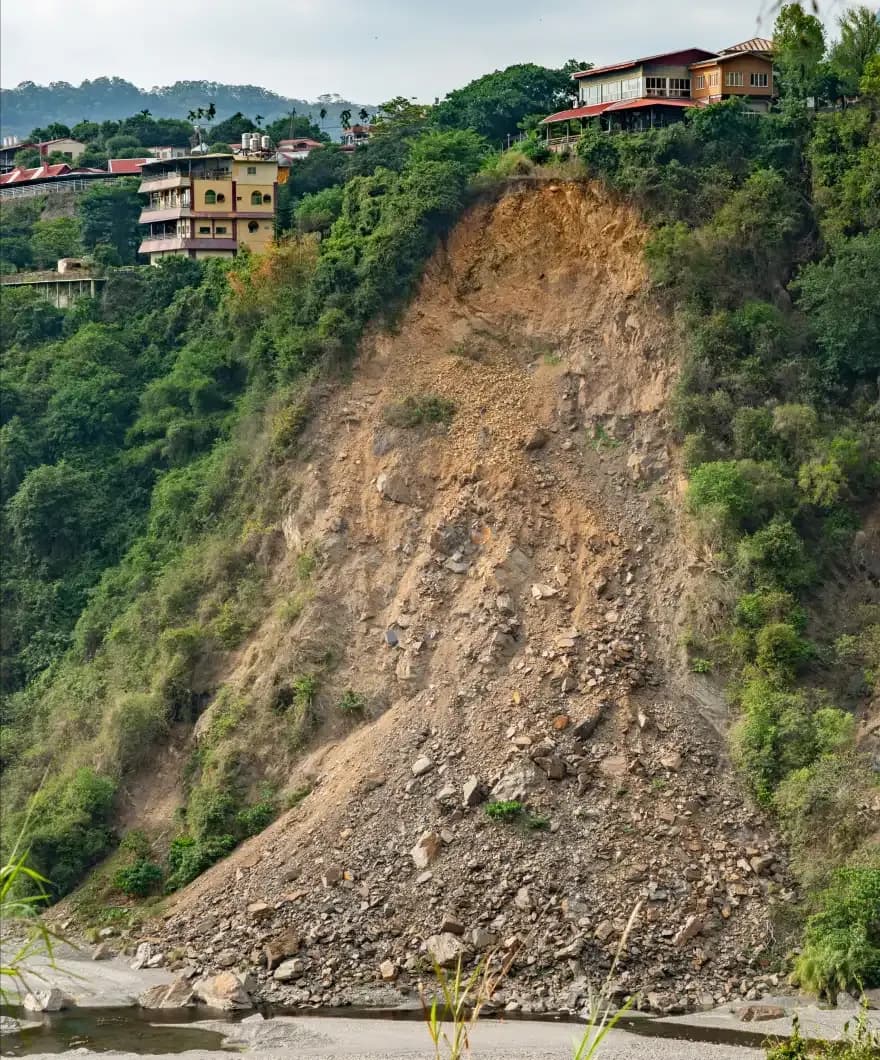
"When a slope fails, a monolithic block of rock or soil is displaced. Landslide processes are always hydrogeologically driven. They occur when permeable rocks are underlain by a layer of impermeable rocks, most commonly clays. Landslide formation is particularly favored by a rock stratification where the dip of the impermeable layer's upper boundary aligns with the surface slope direction. This impermeable layer then acts as a slip surface, along which a substantial block of material slides down the slope. Landslides occur in both mountainous and flat regions, where they are typically found along river, sea, and lake banks, as well as on man-made embankments. A characteristic external feature of landslide-prone slopes is the development of a so-called 'drunken forest'." [General Geomorphology, G.I. Rychagov, 2006]
Mountain Debris Flow
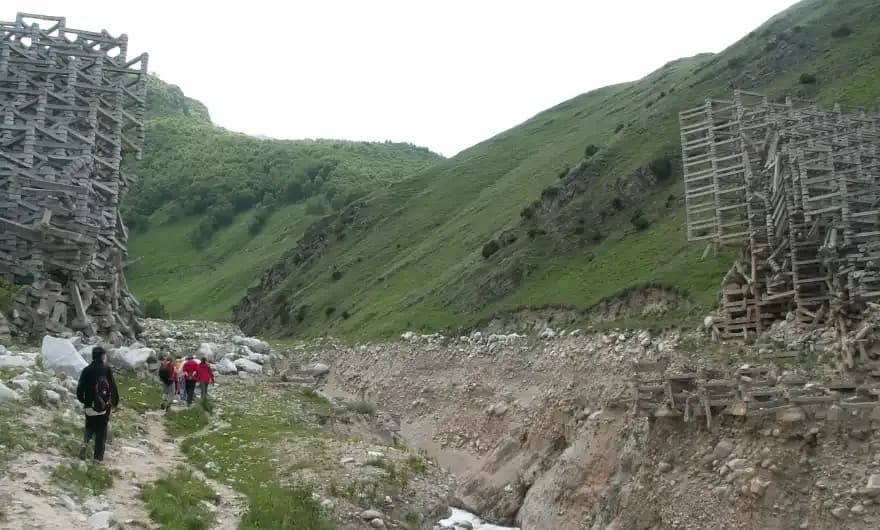
"A mountain channel flow consisting of a mixture of water and rock debris, characterized by pulsating (wave-like) movement and significant erosional, accumulative, and destructive effects. Debris flows are characterized by their short duration (typically 1-3 hours) and lack of strict periodicity.
The immediate primary causes of debris flow formation include heavy rainfall, intense snow and ice melt, and less frequently, earthquakes, volcanic eruptions, glacial lake outbursts, and human economic activity. From a dynamic perspective, a debris flow represents a descending wave of displacement, saturated with solid material and moving along a nominally dry channel.
The density of a debris flow can range from 1,100 to 2,300 kg/m³. The volume of a single debris flow discharge can range from 10,000 m³ to 10 million m³. Based on the composition of the debris mass, debris flows are classified into water-rock, mud-rock, mud, water-snow, and water-ice flows. The front of a debris flow can travel at speeds of up to 40 km/h and possesses immense destructive force." [Glaciological Dictionary, V.M. Kotlyakov, 1984]
Snow Avalanche
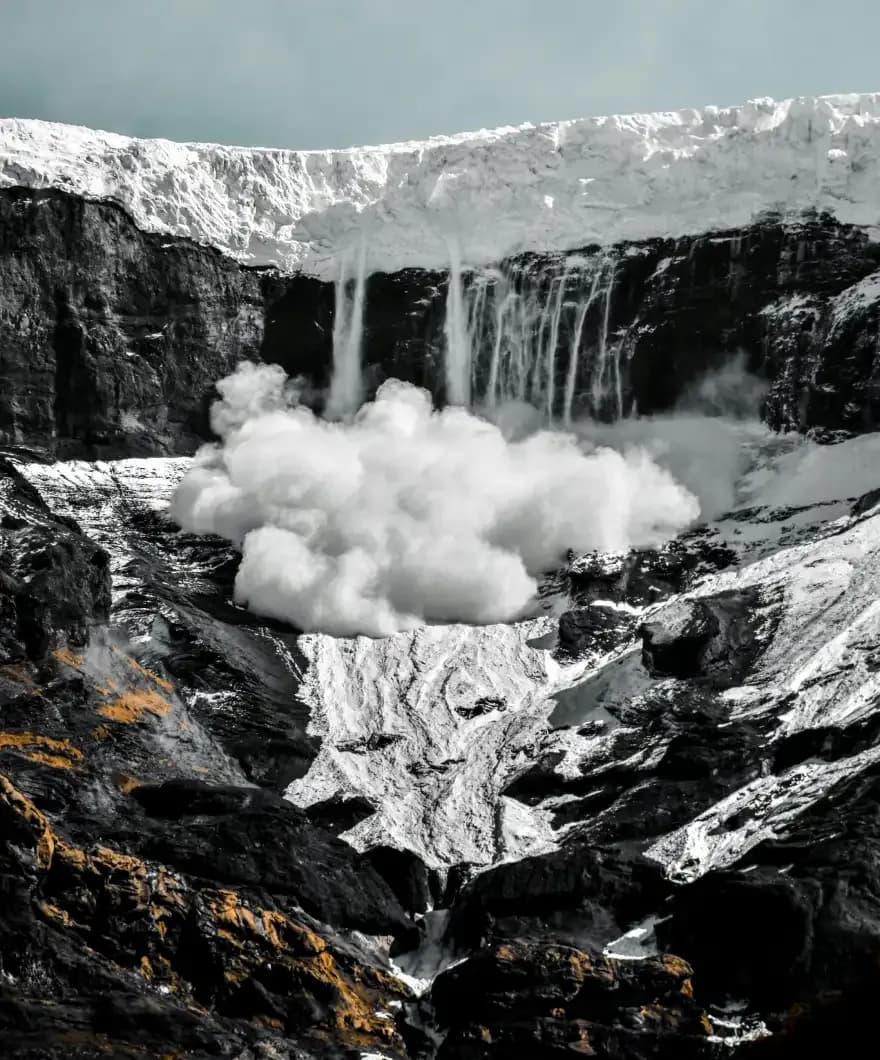
"Sliding and falling masses of snow set in motion on a slope. Under natural conditions, snow avalanches occur when the stability of the snowpack on a slope is disrupted by meteorological phenomena and processes within the snowpack, under specific topographic and vegetation conditions that form a complex of avalanche-forming factors. The lower limit of avalanche speed is conventionally set at 1 m/s. A snow avalanche can increase in volume by entraining new masses of snow into motion. Avalanche volumes range from a few to millions of cubic meters of snow. Cases of avalanches with volumes up to 3 million m³ are known. When dry snow avalanches descend, they generate a destructive air blast wave that propagates ahead of them. An avalanche system is divided into the avalanche catchment area, the avalanche track, and the avalanche runout zone. Avalanche formation is possible on slopes with a steepness greater than 13 degrees." [Glaciological Dictionary, V.M. Kotlyakov, 1984]

Need a consultation or a cost estimate?
Our specialists provide consulting services at the initial pre-design phase. Our extensive experience and comprehensive database of proven standard solutions enable us to rapidly develop a preliminary engineering protection concept, even for the most ambitious projects.