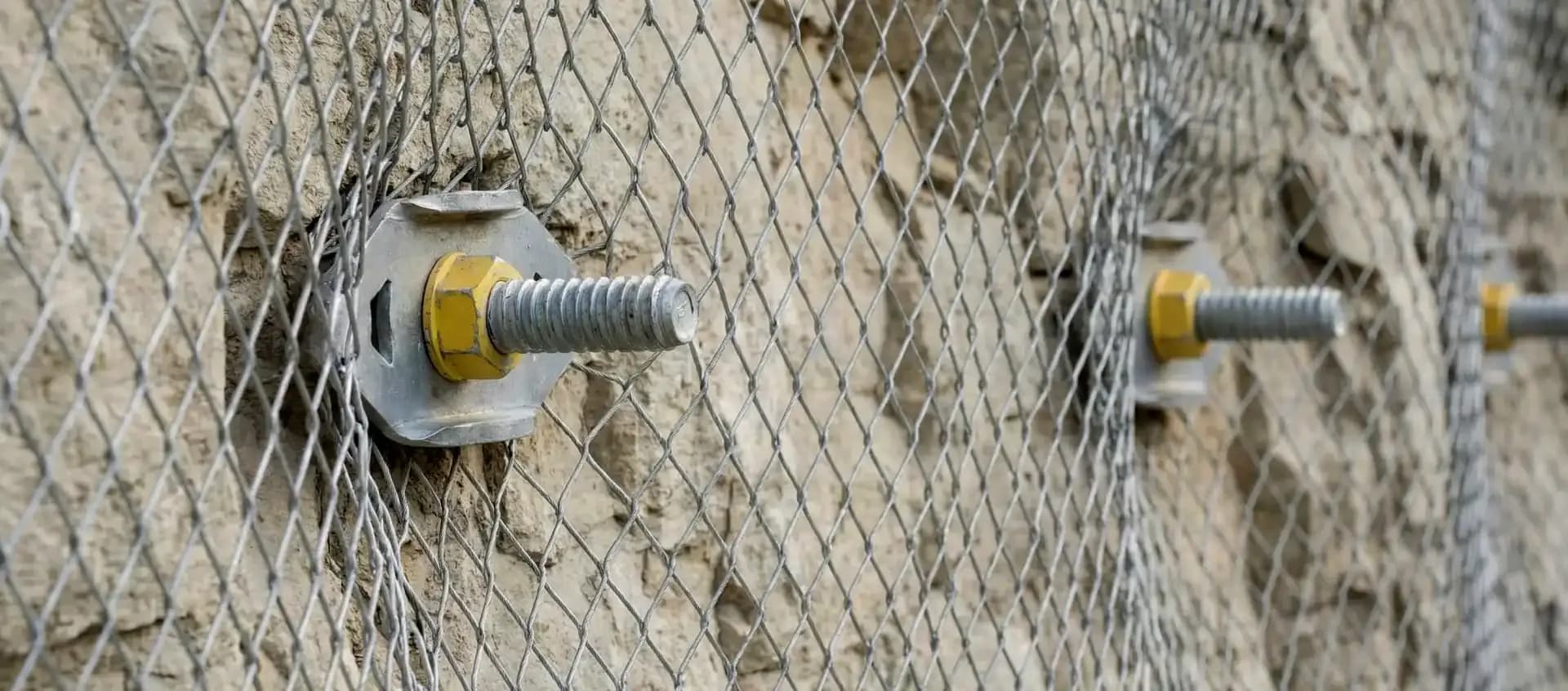
Engineering Protection. Investigations and Design.
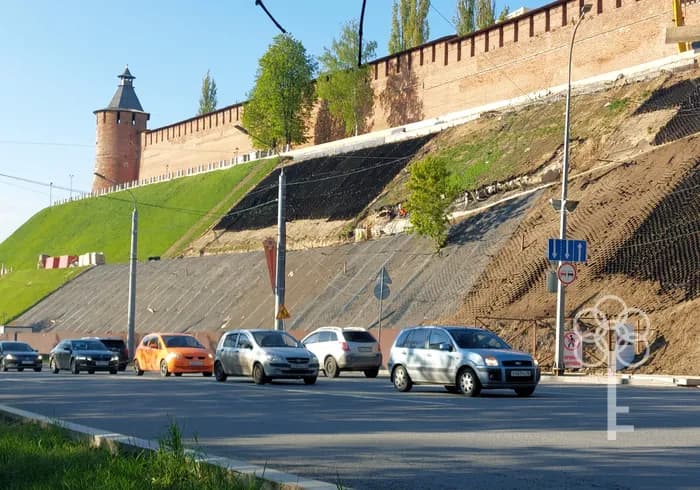
Support during design
We are ready to provide our clients with maximum support (providing drawings, sending specialists for consultations, pricing the project as a whole, etc.) for the design of protective structures for land from the following dangerous geological processes:
- Snow avalanches
- Mountain debris flows
- Landslides
- Rockfalls
- Mountain collapses in a broad sense.
Features of design
Protection from landslides
By landslides, we mean the movement (sliding, viscous-plastic flow) of masses of rock on a slope, occurring without loss of contact between the moving mass and the underlying, stationary mass, often leading to catastrophic consequences.
When conducting investigations on landslide-hazardous slopes, it is necessary to identify the types and subtypes of slope processes according to the mechanism of rock displacement, the conditions of their occurrence and the nature of their manifestation, as well as identify the relationship between landslide deformations with the relief, geological structure, influence of underground water, geological and geotechnical processes (erosion, abrasion, weathering, flooding, drainage, etc.), as well as with the results of economic activity (clearing, loading of slopes, changing the level of underground water, destroying vegetation, dynamic loads, etc.).
The stage of engineering investigations on landslide-hazardous sites is fundamental for subsequent stages of developing design and working documentation for anti-landslide measures, since any calculation of retaining or supporting structures is impossible without taking into account the parameters of the physical-geological model of the landslide mass.
Protection from rockfalls
By rockfalls (avalanches and debris), we mean the collapse (overturning, falling, rolling) of masses of rocks on a slope (in the form of large and small blocks - avalanches, rubble and debris - debris) as a result of their detachment from the main mass.
During the implementation of engineering investigations on territories prone to the development of avalanches and debris processes, our specialists, within the framework of the developed program of work, take into account the following specific factors:
- The localization of slope processes to certain geological formations, tectonic structures and geomorphological elements.
- The influence of hydrological, hydrological and meteorological conditions on the occurrence of slope processes.
- The influence of relief, slope and slope exposure on the manifestations of debris and avalanches.
- The role of economic activity in activating slope processes.
- The presence of other modern exogenous geological processes (weathering, erosion, abrasion, etc.) and the determination of their influence on the stability of the slopes and, in particular, on the occurrence and development of different types of debris and avalanches.
The assessment of the rockfall hazard of slopes is established by calculations, on the basis of which the following are determined:
- Rock masses that are ready to move.
- Paths that debris can pass through.
- Calculation speed of rock movement during avalanches.
- Energy released during avalanches.
Rockfall assessments should be made using mathematical models that take into account the spatial nature of the phenomena. The basis for calculations is the engineering-geological map, which reflects the characteristics of the spatial location of blocks detached from the slopes with the existing and potentially possible surfaces and zones of weakening.
Currently, existing measures to counter rockfalls and debris are divided into:
- Retaining structures: anti-rockfall barrier or curtain.
- Passable structures: concrete galleries.
- Supporting structures: 2D-GEO anti-landslide system.
Protection from mudflows
By mudflows, we mean suddenly occurring short-term destructive mountain mud and rock flows (flow speed up to 10 m/s), saturated with rubble material (up to 50-70% of the total volume), forming in the beds of mountain rivers and temporary watercourses during prolonged rains and floods, with intensive snow and ice melting, as well as when dams, natural and artificial, break in the valleys where there is a supply of loose rubble material.
To substantiate the design of protective measures against mudflows, it is necessary to obtain the following main characteristics of mudflows:
- Flow speed.
- Density.
- Flow rate or impact force of the flow.
- Volume concentration of solid matter in the mudflow.
- Nature of the flow.
- Hydraulic radius of the flow.
- Time to reach a given section.
Protection from snow avalanches
The safety of people and the economic efficiency of economic facilities in the mountains largely depend on the correct solution of issues related to the determination of the zones of snow avalanche formation and the assessment of the dynamic characteristics of snow avalanches, such as volume, speed, distance, throwing, impact force and height of the snow avalanche flow. At the same time, the signs of avalanche activity, expressed in the landscape, do not always determine the boundaries of possible avalanches and allow for the assessment of their dynamic characteristics.
Therefore, the task of obtaining reliable data on the area of the avalanche zone, the average height of the avalanche front, the density and height of the snow cover, the length of the path traveled by the avalanche, the angle of the slope and other parameters is of particular importance for designing anti-avalanche structures.
On the basis of the analysis of the collected data, the dynamic characteristics of rare snow avalanches are calculated using calculation methods. The results of the calculations and modeling are used to select a complex of measures for protecting the territory from snow avalanches, taking into account the real conditions, and to prepare design and working documentation.
Consultations with GeoBarrier specialists
Our specialists provide consultations at the pre-project stage. Our database of proven standard solutions allows us to prepare project documentation in a short time.