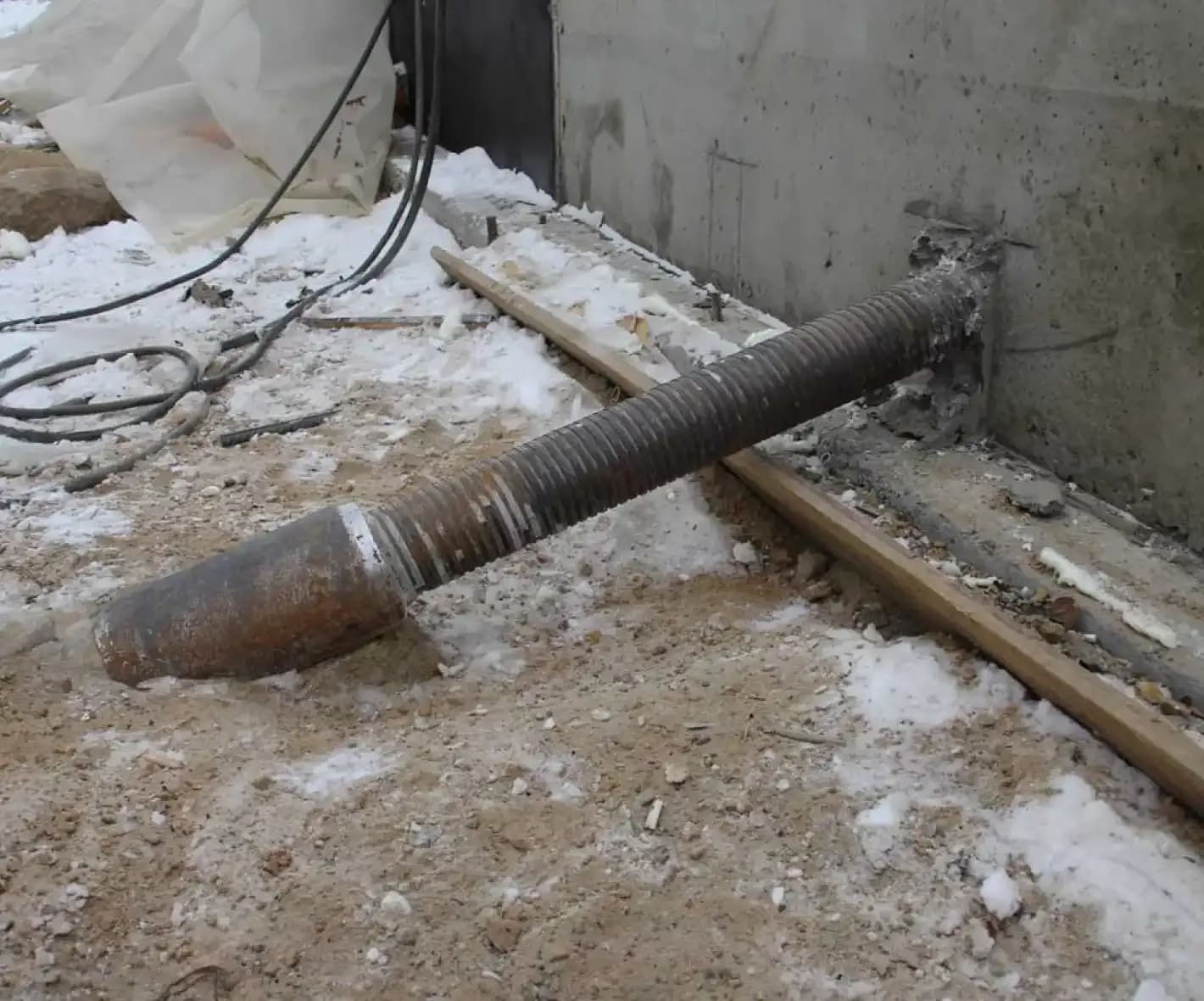
Installation of Self-Drilling Grouted Anchors
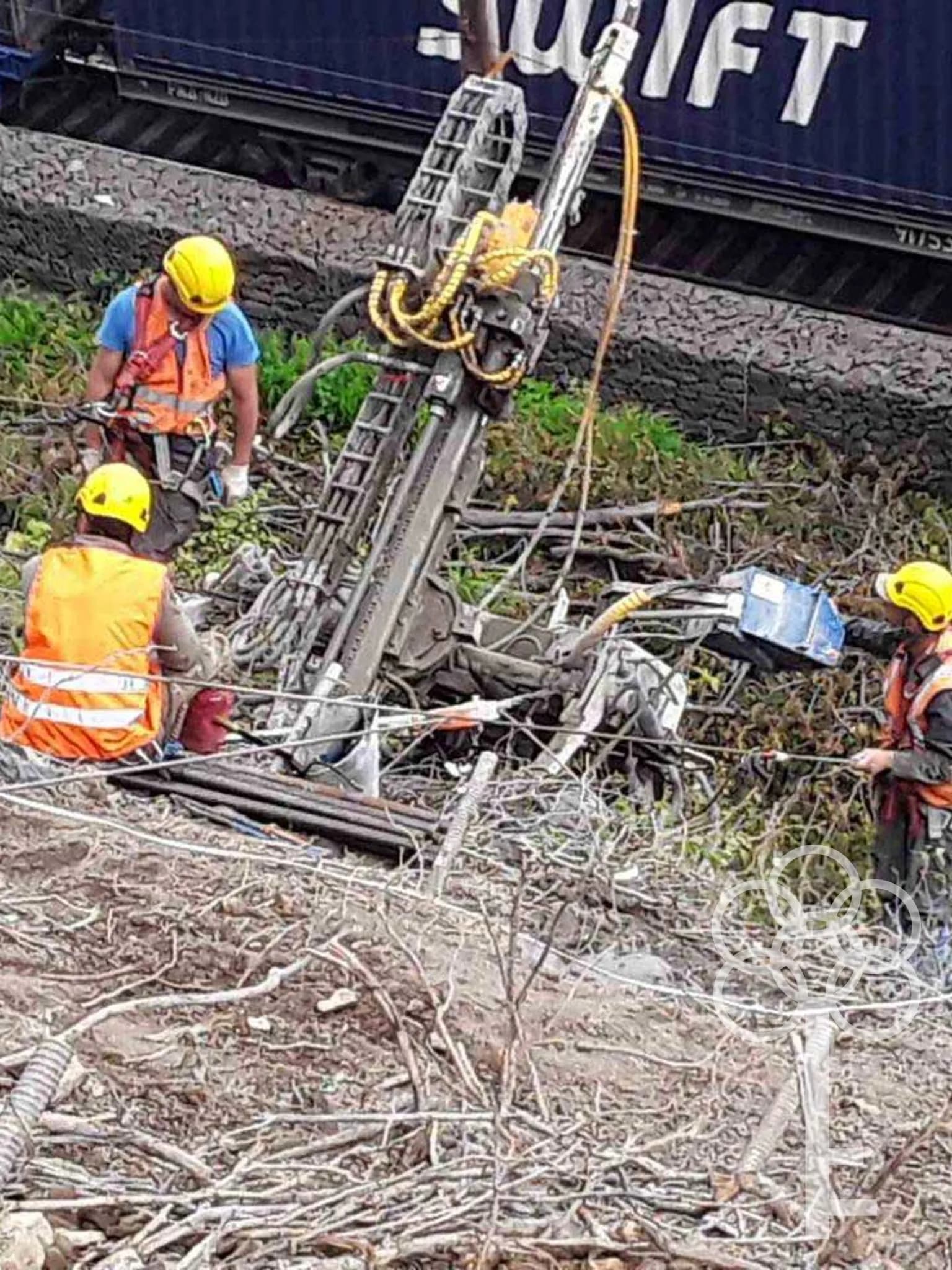
The entire anchor installation process takes place in a single technological step. The rod simultaneously serves as the drilling and injection drive. Immediately upon the start of drilling, an initial injection of pressurized flushing cement grout is performed. Penetrating the soil structure, the cement grout stabilizes the borehole walls, eliminating the need for casing pipes. At the same time, the rod along with its connectors (couplings) remains in the borehole, functioning as the central reinforcement of the pile. Centralizers are used to ensure the protective cover and the design position of the rod.
In some cases, the use of standard piling technologies with heavy machinery is impossible. For the installation of self-drilling grouted piles from assembled rods, compact equipment is used, capable of installing such piles in building basements, between railway tracks, and under bridges and overpasses.
The anchor type, diameter, and length are selected based on the calculated loads and the geological and geomorphological conditions of the site.
Technical Specifications
| Rod Designation (R/N) | Outer Diameter Including Thread (R), mm, ± 10% | Inner Diameter (N), mm, ± 10% | Yield Strength, MPa, min | Breaking Load, kN, min | Unit Weight, kg/m, ± 10% |
|---|---|---|---|---|---|
| R38/N21 | 38 | 21 | 640 | 505 | 4.89 |
| R38/N20 | 38 | 20 | 620 | 515 | 5.18 |
| R38/N18 | 38 | 18 | 650 | 560 | 5.47 |
| R38/N15 | 38 | 10 | 620 | 610 | 5.47 |
| R40/N30 | 40 | 30 | 580 | 320 | 3.92 |
| R40/N20 | 40 | 20 | 560 | 580 | 5.58 |
| R40/N18 | 40 | 18 | 580 | 615 | 6.66 |
| R40/N16 | 40 | 16 | 580 | 660 | 7.07 |
| R40/N12 | 40 | 10 | 580 | 710 | 8.32 |
| R41/N21 | 41 | 21 | 580 | 590 | 7.14 |
| R41/N18 | 41 | 18 | 580 | 625 | 7.28 |
| R42/N20 | 42 | 20 | 550 | 630 | 7.28 |
| R42/N22 | 42 | 22 | 550 | 695 | 7.17 |
| R42/N25 | 42 | 25 | 550 | 620 | 6.38 |
| R52/N26 | 52 | 26 | 570 | 930 | 9.96 |
| R51/N36 | 51 | 36 | 640 | 800 | 7.57 |
| R51/N30 | 51 | 30 | 620 | 935 | 9.06 |
| R51/N28 | 51 | 28 | 610 | 960 | 9.37 |
| R73/N56 | 73 | 56 | 600 | 1000 | 10.76 |
| R73/N53 | 73 | 53 | 550 | 1150 | 13.95 |
| R73/N35 | 73 | 35 | 530 | 1850 | 21.11 |
| R103/N77 | 103 | 77 | 550 | 2200 | 24.81 |
| R103/N50 | 103 | 50 | 450 | 3600 | 43.63 |
| R105/N78 | 105 | 78 | 530 | 2150 | 26.5 |
| R105/N52 | 105 | 52 | 500 | 3600 | 51.08 |
| R135/N83 | 135 | 83 | 500 | 4800 | 69.59 |
solutions
Drill-injected anchors - Applications
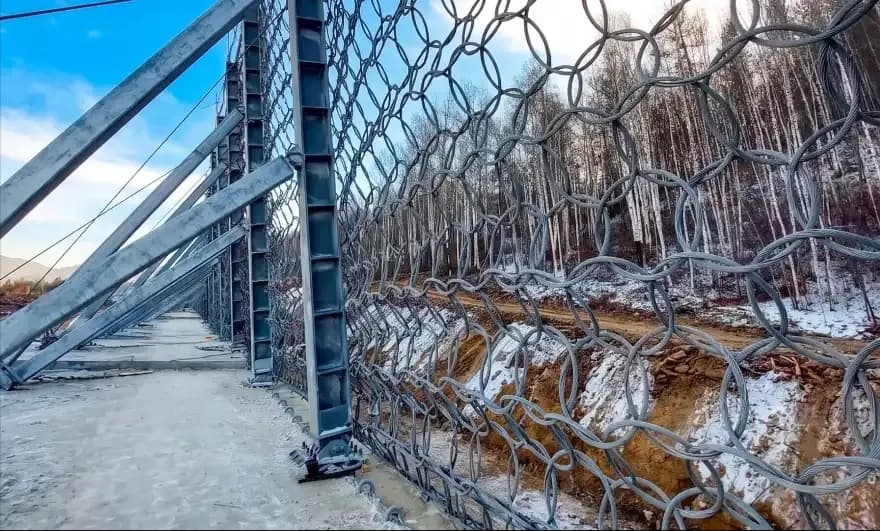
Debris Flow Barrier
Flexible debris flow barriers made of ring nets to stop debris flows and retain solid matter. They can be installed across the channel either individually or as a cascade of barriers one after another, with or without intermediate posts.
Learn more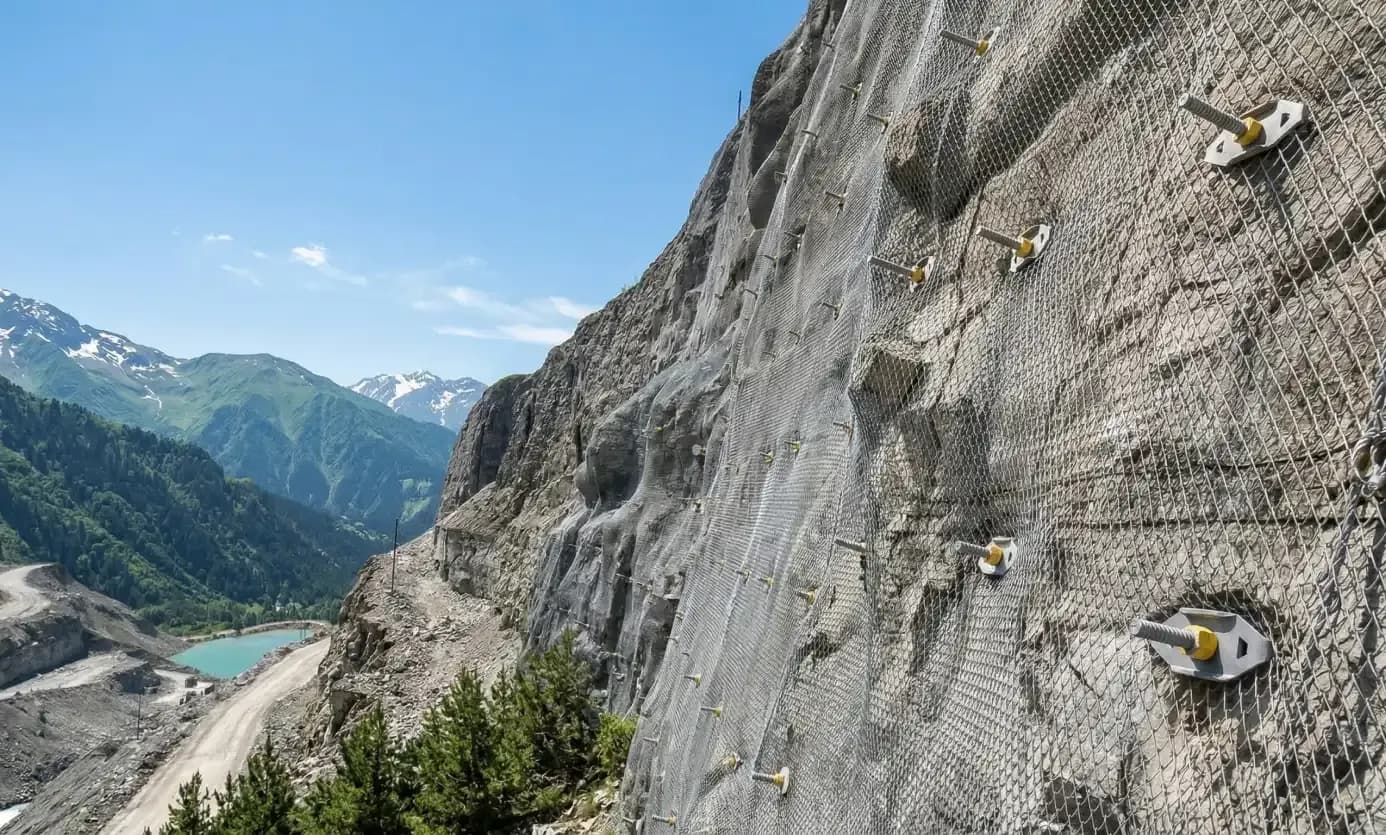
2D-GEO Slope Stabilization and Rockfall Protection System
The 2D-GEO system for the engineering protection of slopes, embankments, and shores against landslides, rockfalls, and soil collapses.
Learn more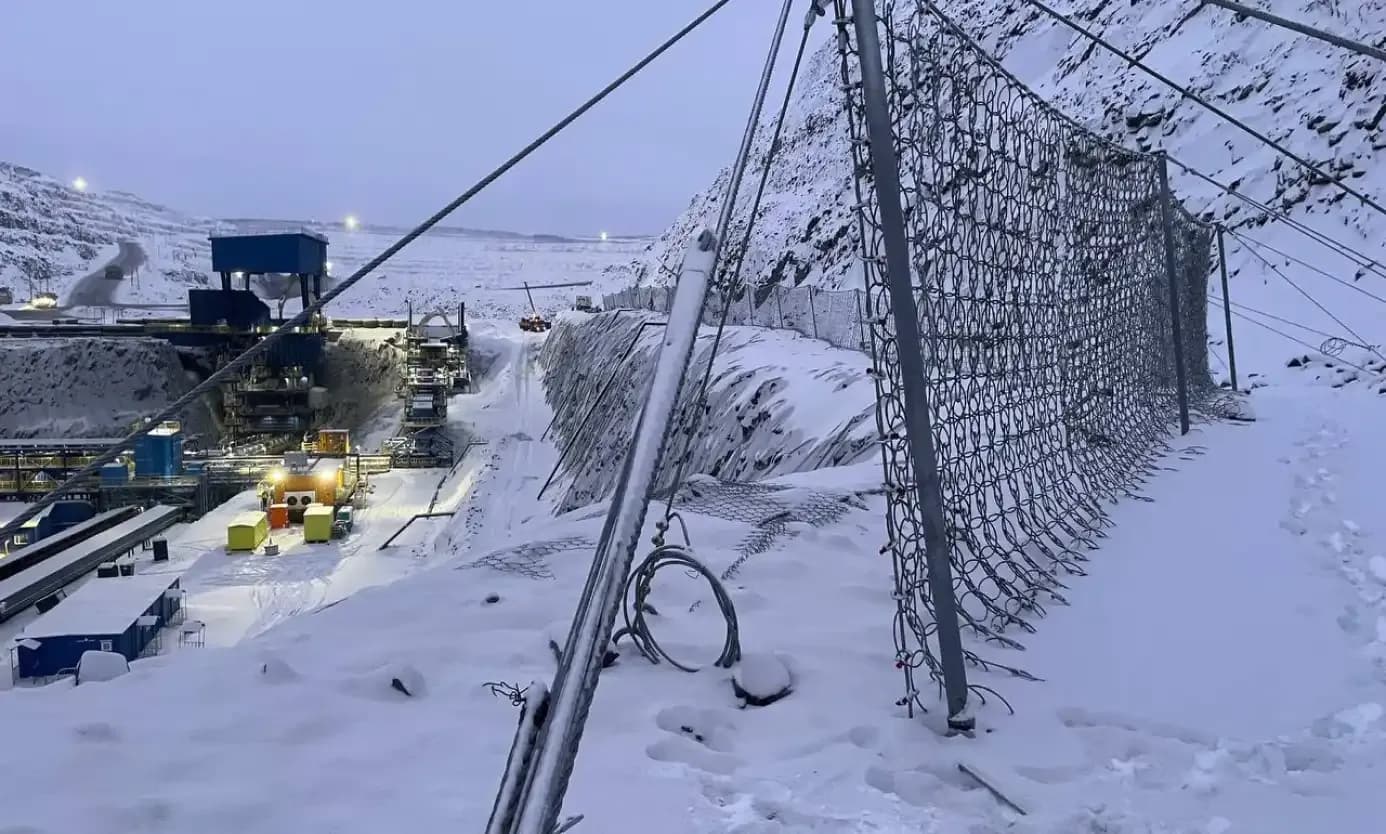
Rockfall Protection Barrier
Flexible rockfall barriers based on ring nets to protect people and infrastructure from falling rock debris.
Learn more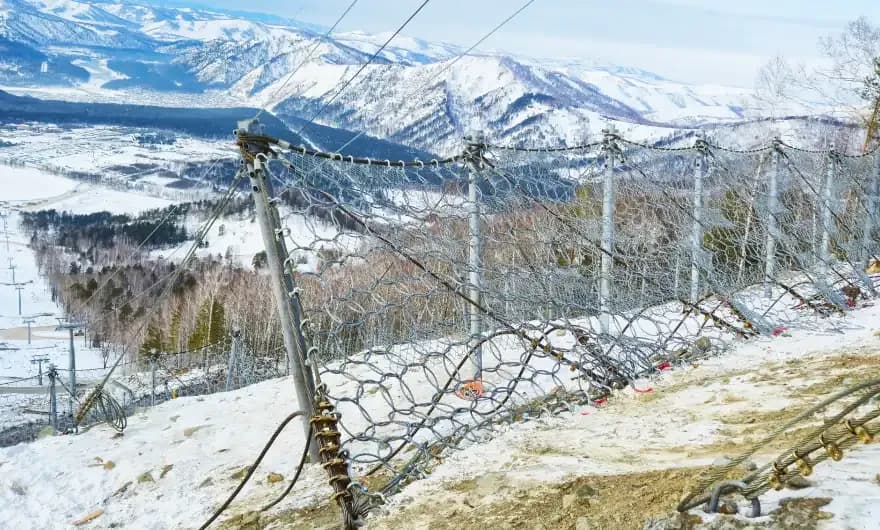
Snow Retention Barriers
Flexible modular snow retention barriers. Installed in the avalanche starting zone, they hold the snowpack in place and prevent movement within the avalanche release area.
Learn more