Article
Slope Stabilization in Open-Pit Mines: Safety and Operational Continuity
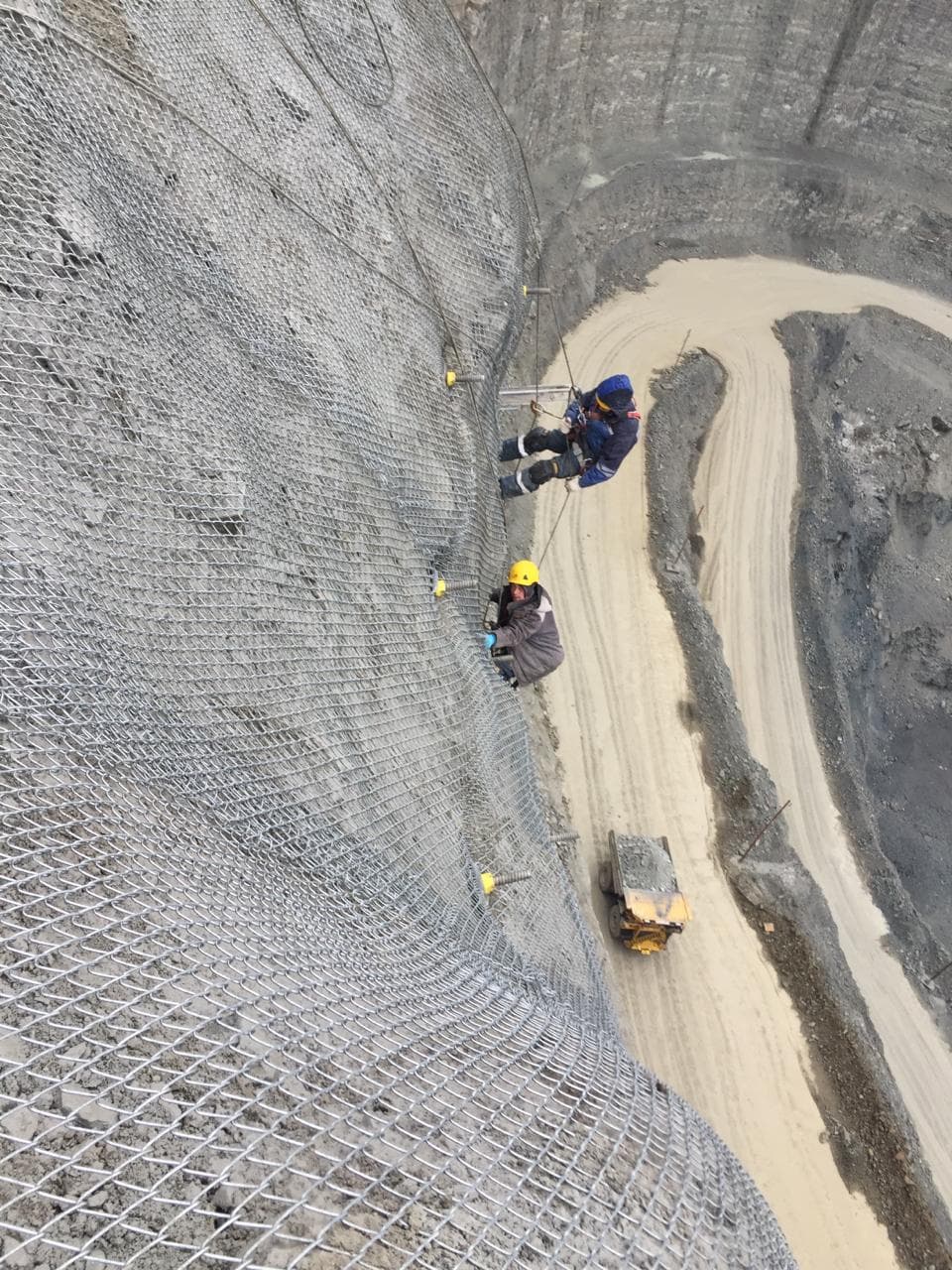
Specific Threats in Open-Pit Mines and Quarries
Open-pit mining inevitably involves the creation of deep excavations and sheer highwalls of immense height. With every meter of deepening, rock pressure increases, and the exposed rock masses are subjected to intensive weathering, temperature fluctuations, and groundwater impact. Localized rock detachments, berm failures, and bench collapses pose a direct threat to haul roads. The fall of even small rock fragments can result in damage to expensive mining equipment (dump trucks, excavators), personnel injury, and multimillion-dollar losses due to forced downtime and the blockage of transport arteries.
Active Engineering Protection of Pit Walls
To ensure the uninterrupted operation of a mining enterprise, the most effective solution is the application of active engineering protection systems (such as the 2D-Geo system). Unlike passive catch barriers, active stabilization is designed to prevent the very occurrence of rock detachment.
The surface of the problematic bench or highwall is draped with a continuous sheet of high-tensile steel mesh. The key element of the system is a regular grid of deep rock anchors. Using specialized toothed spike plates, the mesh is tensioned tightly against the rock face. The system acts as a unified reinforcing "shell," transferring the retaining pressure directly to unstable blocks and rigidly securing them in their design position.
Installation Complexity and Industrial Rope Access
The specific nature of mining and processing plants requires protective works to be carried out under extreme conditions. Typically, slope stabilization on steeply dipping and vertical tiers of an open-pit mine is performed by highly qualified teams of industrial rope access technicians. These specialists unroll heavy, high-tensile mesh and install anchor attachments at heights of tens of meters, working directly on the vertical wall.
Advantages for the Mining Enterprise
A major advantage of modern high-tensile wire stabilization systems is the ability to install them without halting core mining operations. The reinforcement of the upper tiers can occur in parallel with rock excavation and the movement of heavy-duty haul trucks on the lower levels.
The steel mesh is resistant to aggressive environmental impacts, does not obstruct natural groundwater drainage (thereby eliminating hydrostatic pressure on the highwall), and withstands immense static and dynamic loads.