Article
Slope Protection: Passive and Active Solutions Compared
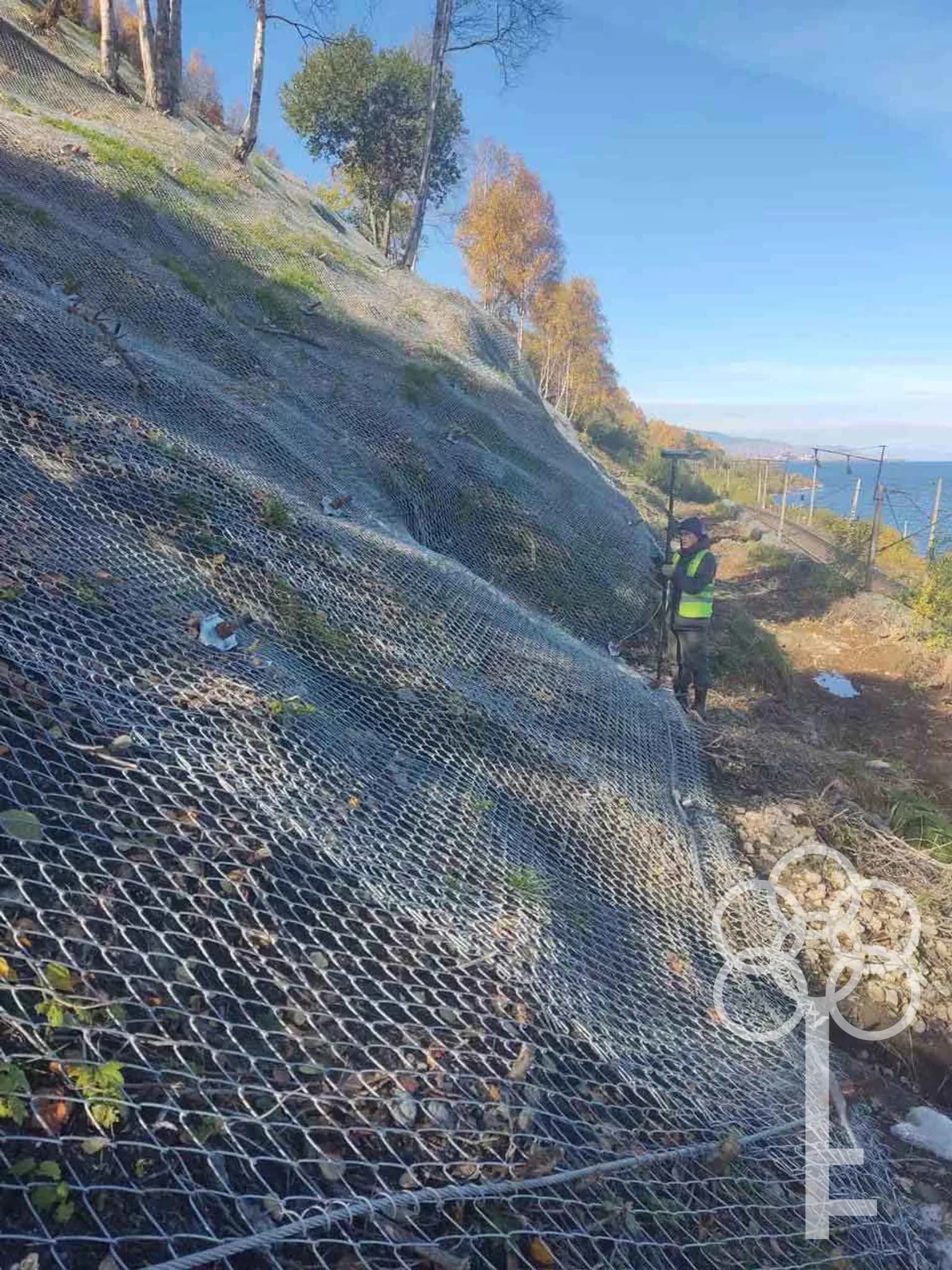
Passive Solutions
Chainmail nets, catch barriers and protective galleries intercept the consequences of a process. They do not always remove the cause of instability, but they reduce risk for people, equipment and infrastructure in the possible fall or sliding zone.
Passive protection is especially useful where the source of danger cannot be fully stabilized: long mountain slopes, roadsides, quarries and areas with continuous rock weathering.
Active Solutions
Anchoring, grouting, surface reinforcement and drainage act on the cause of instability. These measures reduce the probability of soil or rock movement, increase mass stability and allow deformation to be controlled before an emergency event occurs.
Active solutions require more detailed source data, because errors in assessing soils, water saturation or fracturing can reduce the effectiveness of the whole system.
How to Choose
- by geohazard type and likely development scenario
- by required reliability and consequences of failure
- by life-cycle cost, including maintenance and repairs
- by slope access for installation and future inspections
- by the ability to combine works with ongoing facility operation
Practical Approach
The most reliable option is often a combined solution implemented in stages. For example, active anchoring stabilizes the most dangerous zones, while passive nets and barriers reduce the consequences of individual falls that may still occur during operation.
Conclusion
The choice between passive and active protection should not be formal. For most complex slopes, both approaches are best considered as parts of one system: active measures reduce event probability, and passive measures limit consequences.