Article
From Battleships to Mountain Peaks: The Evolution of Ring Nets in Engineering Protection
Looking at a modern rockfall barrier reliably retaining multi-ton rock fragments above an industrial site or mountain highway, it is hard to imagine that this elegant and lightweight structure has a rugged military past. The history of ring net development is one of the most striking examples of how military-industrial complex technologies revolutionized civil construction and geotechnics.
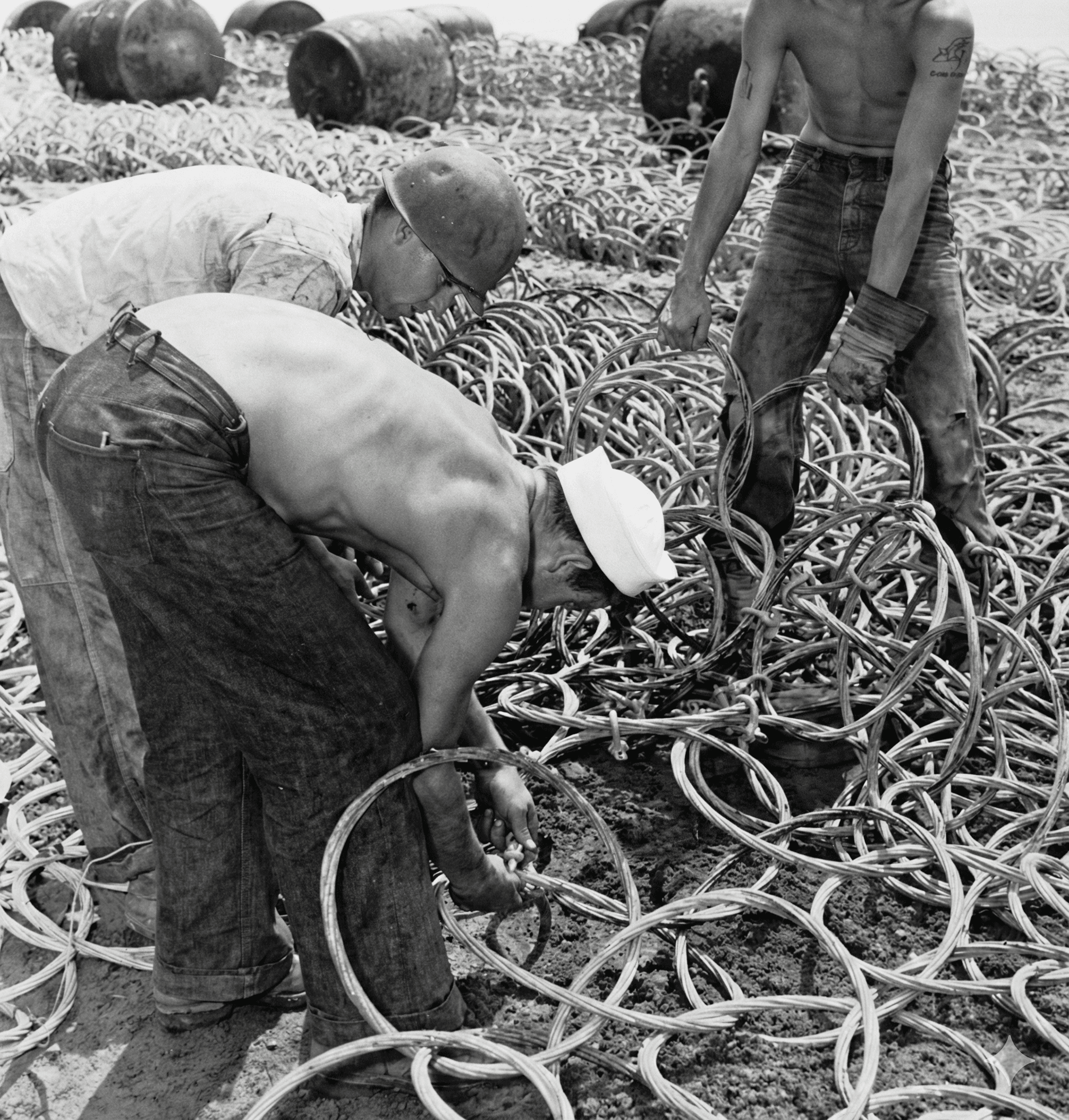
Naval Roots: Protection Against New Threats The concept of steel mail, consisting of interconnected rings, dates back to antiquity, but its modern "heavy" reincarnation occurred in the late 19th century. In the 1870s, the navies of leading maritime powers began to be equipped with self-propelled mines—torpedoes. For the massive, heavily armored, yet sluggish ironclads (battleships), they posed a lethal threat. Increasing armor below the waterline was impossible due to weight constraints.
The solution proved elegant: ships began to be equipped with torpedo nets. While anchored in roadsteads or moving slowly, a heavy net woven from steel rings was deployed around the ship on special booms. Unlike rigid armor, the net functioned elastically: it softly received the torpedo, dissipated its kinetic energy, and either forced it to detonate at a safe distance from the hull or simply entangled the projectile's propellers. The core principle of flexible energy absorption was proven in practice.
"Swords to Ploughshares": Moving to the Mountains Following the end of World War II, torpedo nets lost their relevance due to changing naval warfare tactics and the increased speed of torpedoes. However, hundreds of tons of these durable steel products remained in European warehouses.
In the 1950s, engineers in Switzerland—a country where protecting transport arteries from rockfalls and avalanches is a matter of national survival—faced a problem. Reinforced concrete galleries were too expensive, and rigid barriers were quickly destroyed by the direct impacts of massive boulders. Alpine engineers decided to conduct an experiment: they stretched decommissioned military ring nets across rocky couloirs.
The results exceeded all expectations. Thanks to its topology (each ring is freely interwoven with four or six adjacent ones), the net did not tear from a point impact. Upon collision with a rock, the force was instantaneously distributed across the entire area of the panel. The rings deformed and stretched but absorbed the colossal energy of the falling block. Thus, the principle of flexible engineering protection was born.
Technological Evolution: From Military Surplus to High Engineering Naturally, modern rockfall barriers have advanced far beyond their naval ancestors. The use of heavy and soft shipbuilding steel has been replaced by the application of innovative materials.
The evolution of the ring net in geotechnics has gone through several critical stages:
Ring Material: Modern rings are not made from a single thick bar; instead, they are wound from multiple strands of high-tensile steel wire (with a tensile strength exceeding 1,770 N/mm²). This exponentially increases the energy capacity and reduces the weight of the structure.
Corrosion Protection: Military nets did not need to last for decades, whereas a modern barrier must endure harsh mountain environments for up to 50 years. To achieve this, dense zinc-aluminum coatings (such as Galfan) are applied.
System Approach: The ring net is no longer a standalone element. Today, it is the "heart" of a complex engineering mechanism that includes yielding posts, a system of support ropes, and energy-absorbing devices (dissipators) that activate under critical peak loads, preventing the rings from rupturing.
Conclusion The history of the ring net is a journey from an intuitive military invention to a precise, mathematically calibrated science. Having undergone over a century of evolution, the technology of elastic resistance has proven that the best way to handle the destructive energy of nature is not rigid confrontation, but flexible absorption. Today, certified ring net barriers are capable of stopping rock blocks flying with energies exceeding 8,000 kJ (the equivalent of a truck crashing into a wall at high speed), ensuring the absolute safety of transport and industrial infrastructure.