Article
Stabilizing Erosion-Prone Slopes with Mesh Systems
Problem
Surface erosion accelerates slope degradation, washes out fine particles and creates gullies. At first the process may look minor, but after several cycles of rainfall and drying the slope loses cohesion, local sliding appears and weaker layers become exposed.
Areas without vegetation, zones with poor drainage and slopes near roads or industrial sites are especially vulnerable. If erosion is not stopped, the volume of restoration works grows quickly.
Engineering Approach
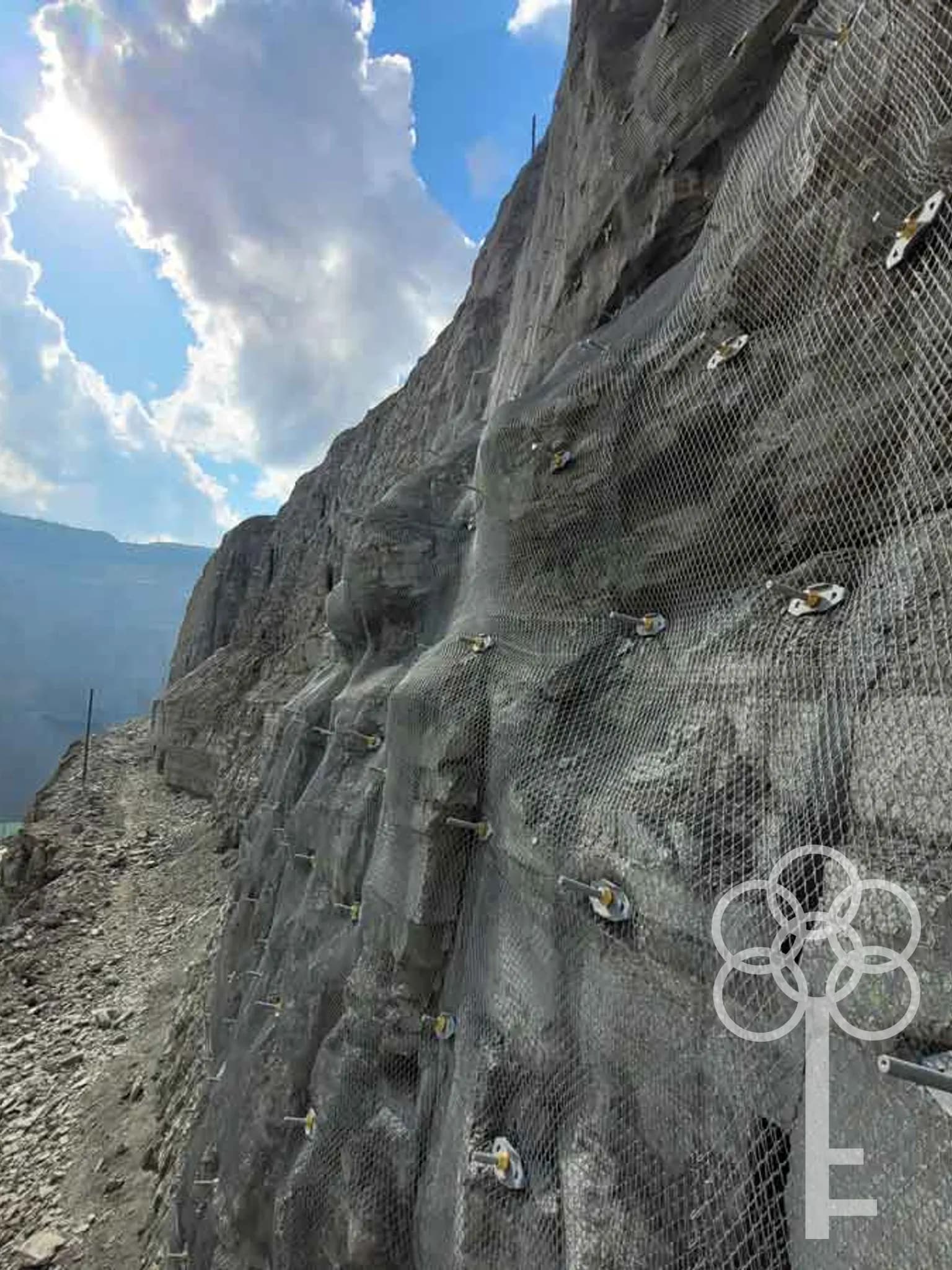
A mesh system fixes the surface, while point anchoring prevents the near-surface layer from sliding. The mesh retains soil, distributes local deformation and creates a base for further surface stabilization, including biomats or vegetation.
Design considers slope inclination, soil particle composition, runoff direction and water concentration zones. Protection must work together with drainage: without water control, the mesh only addresses consequences rather than the cause of degradation.
What Matters in Operation
- seasonal inspections after snowmelt and heavy rain
- removal of sediment, debris and materials blocking drainage
- local restoration of fasteners and damaged mesh areas
- checking gullies near edges, outlets and service roads
- monitoring vegetation if it is part of the stabilization system
Conclusion
An integrated system slows slope degradation and helps keep the surface in its designed condition. The best result comes from combining mesh reinforcement, anchoring and organized drainage.
Practical Effect
After stabilization, soil loss decreases, planned backfilling volumes are reduced and nearby facilities become safer to operate. For long slopes this is especially important: erosion stopped locally does not continue spreading along the slope line.