Article
Design Stages for Chainmail Rockfall Protection Systems
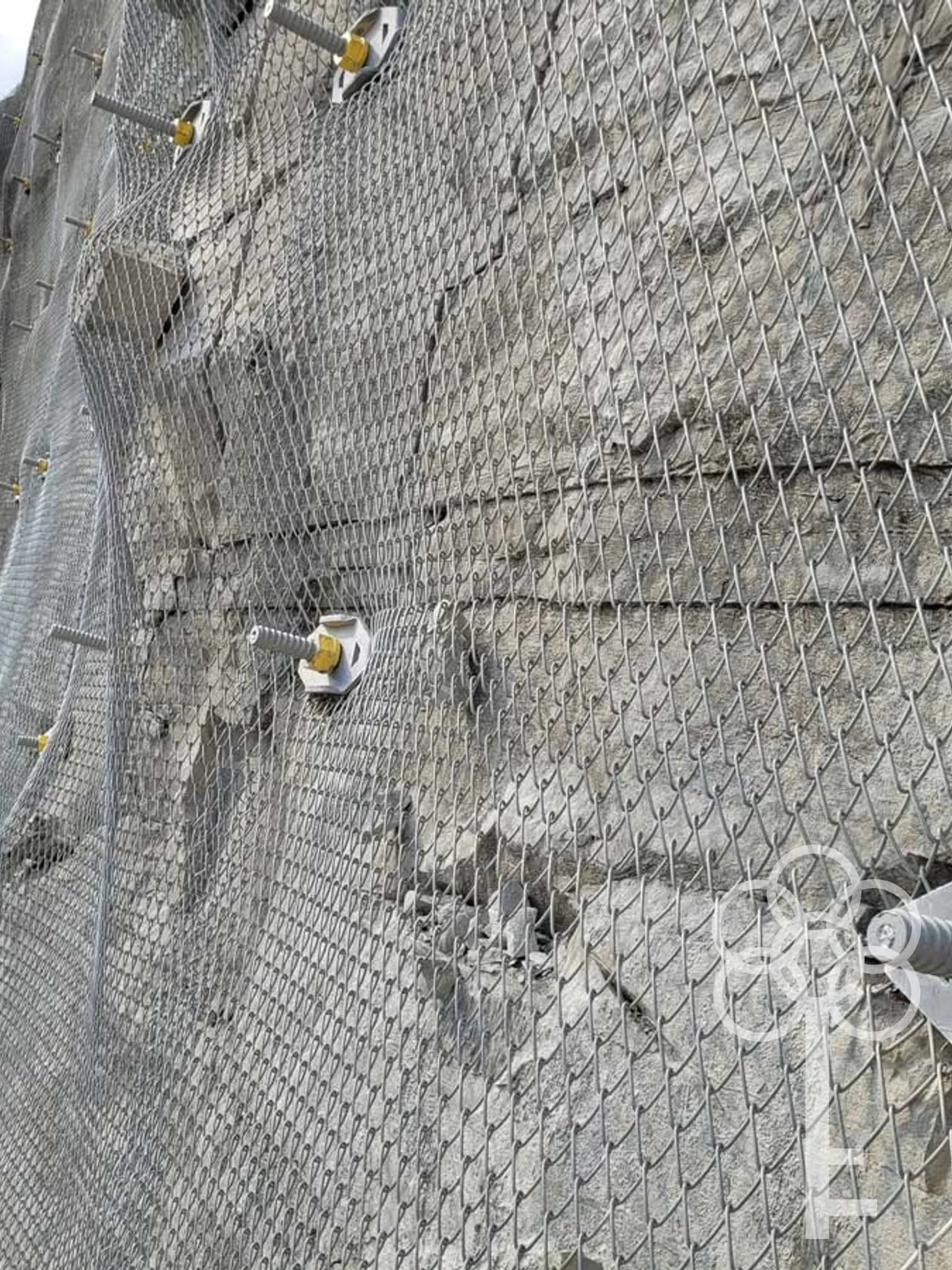
Source Data
Design depends on geology, rock fracturing, surface inclination, water inflow and calculated fall energy. These parameters define not only the mesh type, but also anchor spacing, rope layout, reinforcement zones and maintenance requirements.
At the early stage, engineers collect survey data, photographs, geotechnical information and records of previous rockfall events. If the facility is already in operation, inspection logs and information about recurring ravelling zones are especially useful.
System Configuration
The mesh type, anchor spacing, fastening layout, panel orientation and additional reinforcement zones are selected. The system must work as one contour: the mesh receives local impact, ropes redistribute forces and anchors transfer them into the ground or rock mass.
For long slopes, the design is often divided into zones with different risk levels. This avoids overdesigning moderate-load areas while strengthening the most hazardous sections.
Quality Control
- checking mesh tension and uniform contact with the surface
- controlling anchor depth, angle and fixing quality
- inspecting connectors, clamps and rope joints
- recording as-built layouts with actual node locations
- preparing inspection rules after rainfall, frost and nearby repair works
Quality control starts at every stage, not only at the end of installation. Errors in anchors or joints are harder to correct after the mesh is fully laid.
Outcome
Correct calculation increases system service life and reduces operational risks. The more accurately the design reflects real slope conditions, the lower the chance that protection is excessive in one area and insufficient in another.
Practical Takeaway
Designing a rockfall protection system is a balance between calculated reliability, constructability and future maintenance. A strong design answers not only how to install protection, but also how to keep it functional after several seasons of operation.