Article
Installing Chainmail Structures on Complex Terrain
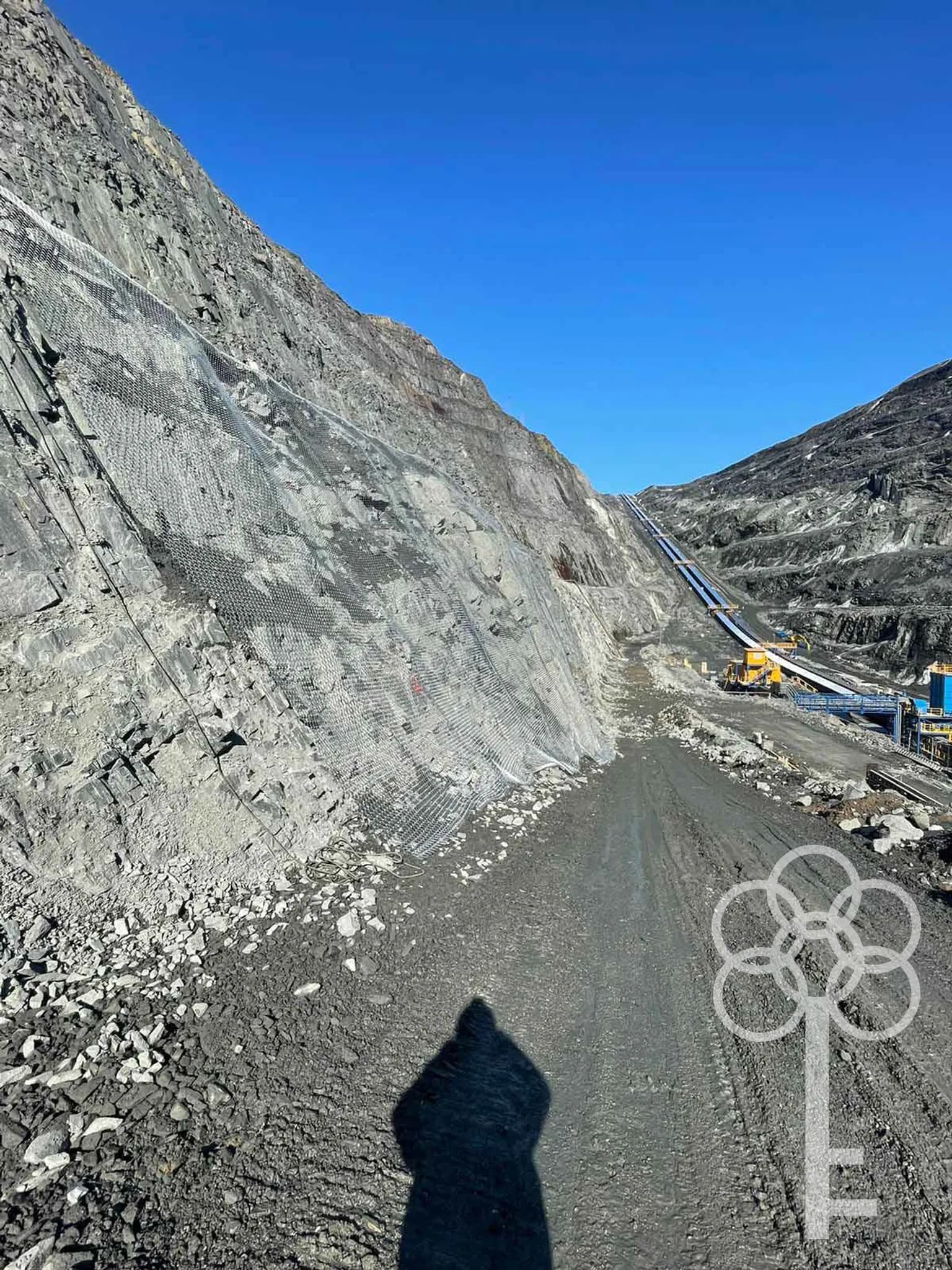
Preparation
Installation on complex terrain begins with access assessment, marking of fastening points and verification of the actual slope condition. Design decisions should be compared with real geometry: on irregular terrain, even a small elevation mismatch can change mesh tension and anchor performance.
Material logistics, safety lines, temporary storage areas and crew movement routes are planned separately. The more accurately the installation route is prepared, the fewer delays and corrections appear during the works.
Installation Stages
- Drilling and installing anchors at designed points with control of depth, angle and fixing quality.
- Laying mesh panels according to runoff direction, surface irregularities and load concentration zones.
- Connecting mesh panels, installing rope elements and forming a continuous protective contour.
- Tensioning the system with step-by-step checking of fastening nodes.
- Final inspection, photo documentation and handover of as-built records for operation.
On steep sections, works are often performed in separate work zones. This helps maintain safety and prevents overloading installed elements before the whole system is completed.
Control
Geometry, surface contact, connector condition and the absence of unintended folds are checked. The mesh should not hang freely where it must stabilize the surface, and it should not be overtensioned where seasonal deformation is expected.
A repeat inspection after the first rainfall or freeze-thaw period is useful because it shows how the system has adapted to actual site conditions.
Result
Quality installation on complex terrain reduces the risk of local failures and extends the service life of the protective system. The main principle is not to speed up installation at the expense of connection control, because these nodes determine the reliability of the whole structure.